
Profile
Shinichi Sakuraya
Discovering inherent potential in structures and transforming conflicts into breakthroughs.
Exploring structures where value is created, across technology, space, and management.
Development of CRTs for high-definition television at Sony. SonyDrive and 3D virtual spaces in the early days of the Internet. Connecting museums, cities, art, architecture, and networks through ARSeeD Inc., which he founded. Then, business management at MISUMI, corporate transformation at Goldratt Consulting, and programs that turn regional issues into businesses.
Shinichi Sakuraya's work cannot be confined to a single specialized field. The scope of his design has expanded from electronic devices to information spaces, to the back-and-forth between information spaces and real locations, and further to businesses and organizations, regions involving independent entities, and social systems including institutions and public goods.
What connects his journey is an investigative stance that seeks to understand not only individual elements but also the relationships between them and the overall functioning of the system.
Performance and physical constraints. Virtual spaces and real-world experiences. Departmental rationality and overall business results. Shared goals and differing problem perceptions. The 'conflicts' here refer not only to clashes between people but also to such tensions. Rather than dismissing one or the other, Sakuraya has uncovered new possibilities by re-examining structures and connections.
Even with excellent technology, experience alone is not created. Even if information is complete, its meaning may not be conveyed depending on how it's connected. Even if capable people gather, results may not be achieved depending on the organizational structure.
Not just what exists, but how things are connected. Where are possibilities closed off, and what needs to be changed to get the whole system moving?
Currently, he manages GrabFuture LLC, and is developing these questions into 'The Physics of Prosperity' and 'Theory of Meta Keystone'. Moving back and forth between experiences in creating technology, configuring spaces, and operating businesses, he explores value creation in organizations and business ecosystems.
Creating tangible value from physical phenomena
Sony — Development of CRTs for high-definition television
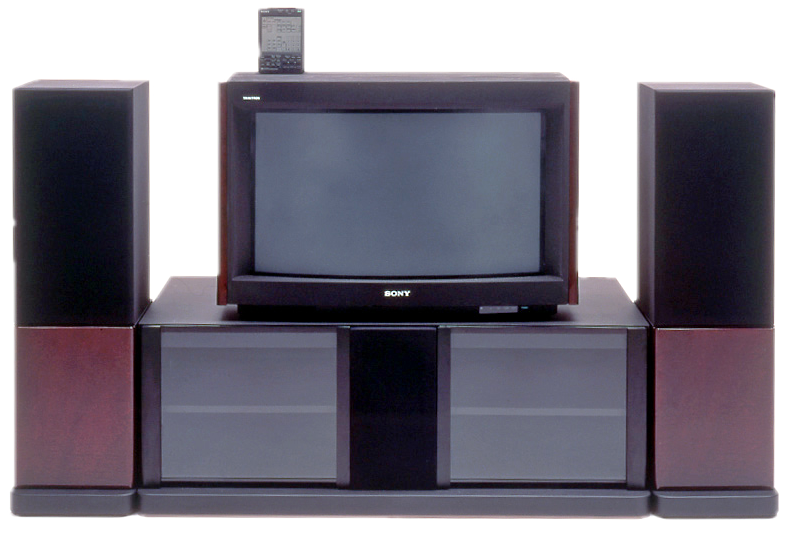
The starting point was the development of the world's first 36-inch consumer high-definition CRT at Sony.
Behind the familiar experience of video, many conditions were involved, such as electron emission and control, magnetic fields, materials, shapes, and vacuum pressure. To form an image on the screen, these elements had to function not only individually but also as a single device.
Development that pursues high display performance is also a task of comparing design with phenomena. How do computational concepts behave in an actual device? What impact does an improvement in one part have on another? Where is there room for new designs within physical constraints? The culmination of design was whether it could provide the value desired by users.
As an engineer, Sakuraya was involved in technology development that connected invisible phenomena to tangible value. In the process, patent applications including Sakuraya as an inventor were also filed (JP-A-H6-124661, JP-A-H6-131988, JP-A-H7-065745, JP-A-H7-147147).
The technical achievements of the CRT development were presented in May 1991 at the international symposium of The Society for Information Display held in Anaheim, USA. The 'KW-3600HD', equipped with the CRT Sakuraya was involved in, received the 1991 Good Design Award and was registered in 2017 as No. 00226 of 'Essential Historical Materials for Science and Technology (Future Technology Heritage)' by the National Museum of Nature and Science, Tokyo, as one of the 'earliest high-luminance home high-definition receivers'.
This engineering experience is an important background for understanding his current approach to organizations. Not just concepts and ideals, but how to realize them as a system. And, to consider the performance of individual elements separately from the overall results achieved. This perspective has appeared in his subsequent activities, even as the subject matter changed.
Creating spaces that people visit, not just where information flies around
SonyDrive, Virtual Society, Cyber Passage
In the 1990s, the Internet began to emerge not only as a new means of communication but also as a venue for reshaping relationships between people and between people and information.
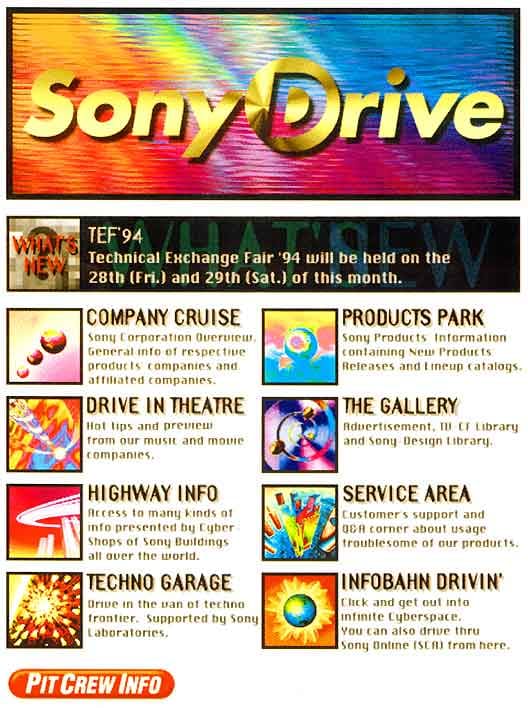
According to Sakuraya's records, 11 volunteers at Sony who were quick to recognize the potential of the internet created a prototype website called 'SonyDrive' outside of their regular duties in 1994. This was the year before the release of Windows 95 for general users, and the Web browser 'Netscape Navigator' had just appeared. Sakuraya, who was then engaged in business strategy in the Product Planning Department of the TV Business Headquarters, also participated in the prototype creation as one of the volunteers. When he explained the potential of the internet to Suehiro Nakamura, the executive in charge of the TV Business Headquarters, during a regular meeting, it was reported that President Norio Ohga had also brought up the topic at board meetings. Later, he had the opportunity to directly present the impact of the internet and SonyDrive to President Ohga. At President Ohga's direction, Nobuyuki Idei, then the executive in charge of the Creative Communication Division, became the patron, and 'SonyDrive' was promoted to an official activity, to be unveiled at the internal technical exchange meeting held every autumn.
On May 7, 1995 (Founding Anniversary) of the following year, 'SonyDrive', which was started by volunteers, was publicly released as Sony's official website, largely retaining its prototype design and structure. Idei, who was the patron, had assumed the presidency in April 1995, one month prior.
'SonyDrive' was an initiative to deliver corporate value to people in a way different from technology development. It not only published product and corporate information but also created points of contact with visitors on the network. The scope of activities expanded from designing the internal mechanisms of devices to the information environment between corporations and society.
What extended that development into space were virtual space projects such as 'Virtual Society' and 'Cyber Passage / 3D World'.
"Virtual Society," conceived around 1984 by Hiroaki Kitano of Sony Computer Science Laboratories (Sony CSL), was developed and implemented by a research team, including Sakuraya who had transferred to the Information and Communication Division of the Central Research Laboratory, and was unveiled to the public at the world's first full-scale virtual exposition, the "Internet 1996 World Exposition," held in 1996.
It was an advanced initiative that allowed users to stroll through 3D cities and shops created in a virtual space, and virtually experience Sony's latest products, pioneering what is now known as the "metaverse."
In 3D representation using VRML (Virtual Reality Modeling Language), information possesses not only text and images on a page but also position, distance, viewpoint, and movement. People can not only read information but also move through space, approach objects, and re-examine them from different viewpoints.
There, in addition to what is presented, communication, such as how one encounters, understands, and interacts with information through various paths, becomes the object of design. This content was presented at the 3D Video Forum as "CyberPassage Creating the VRML World" and at The Japanese Society for Artificial Intelligence (JSAI) as "Content Creation Technology in the Network Era."
Architect Neil Denari, based in Los Angeles, held the exhibition "INTERRUPTED PROJECTIONS" at Gallery MA in Nogizaka, themed on the fusion of "signs" as symbols of information controlling modern society and architecture. In parallel with producing this world's first AR-powered real exhibition, a virtual exhibition on the network using VRML technology, "INTERRUPTED PROJECTIONS on the Cyberspace," was also created.
At Gallery MA, "NaviCam," one of the research outcomes of Jun Rekimoto of Sony Computer Science Laboratories (Sony CSL), was introduced, realizing a globally unique experimental installation that overlapped real "architectural space" with virtual "information space." This initiative, where three worlds – the real world, the virtual world, and a world where real and virtual merge – existed in parallel, presented a new form of fusion between art, architecture, and technology.
If SonyDrive's work was to create a point of contact between companies and people, Virtual Society and INTERRUPTED PROJECTIONS extended that point of contact to virtual spaces, real exhibition spaces, and experiences where both overlapped. How can the same concept be experienced in different spaces? Here too, it is the way technologies are connected, rather than individual technologies themselves, that creates new experiences.
From controlling electrons to render images, to structuring information to create experiences. Sakuraya's activities evolved to explore how technology creates relationships between people and the world.

Connecting the Web to Real-World Locations
ARSeeD Inc. and Real World Web
In 1996, Sakuraya founded ARSeeD Inc. He expanded his activities to production and implementation, connecting the internet, art, architecture, and design.
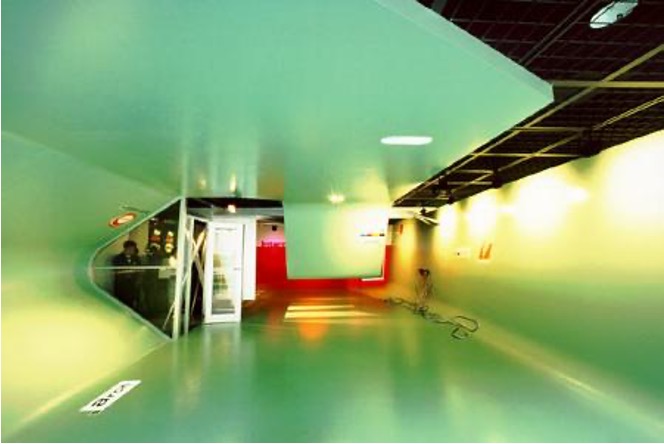
"Real World Web" was a 1997 project where Sakuraya, who had launched ARSeeD Inc., and Hiroaki Kitano of Sony CSL teamed up again. As stated in the message, "Now that everything is being digitized, it might not be meaningless to pull cyberspace back into the real world and experience/perceive what's happening with our bodies and raw senses," the main pages of SonyDrive were transferred onto acrylic panels, and their link structure was strung throughout the exhibition room with fishing line.
This installation, held at AXIS Gallery in Roppongi, positioned acrylic panels by converting web-specific data such as directory structure, hit counts, and data size into spatial coordinates. The experience of walking around the space where fishing lines floated like a spider's web and navigating pages was distinct from browsing with mouse clicks. At the opening event, Ted Nelson, known as the "father of hypertext," who was teaching in Japan at the time, also attended, making the event a great success.
By placing the Web's link structure in space, the "structure of relationships" typically hidden behind the screen became visible in a walkable, experiential form. It was also an attempt to make the structure visible before changing it.
Instead of opposing the virtual and the real, connecting them expands the possibilities of accessing places and experiences. "Real World Web" was an effort to explore what happens when virtual space is reconfigured into real space.
Hara Museum of Contemporary Art — Not Just to the Artworks, but to the Museum as a Place
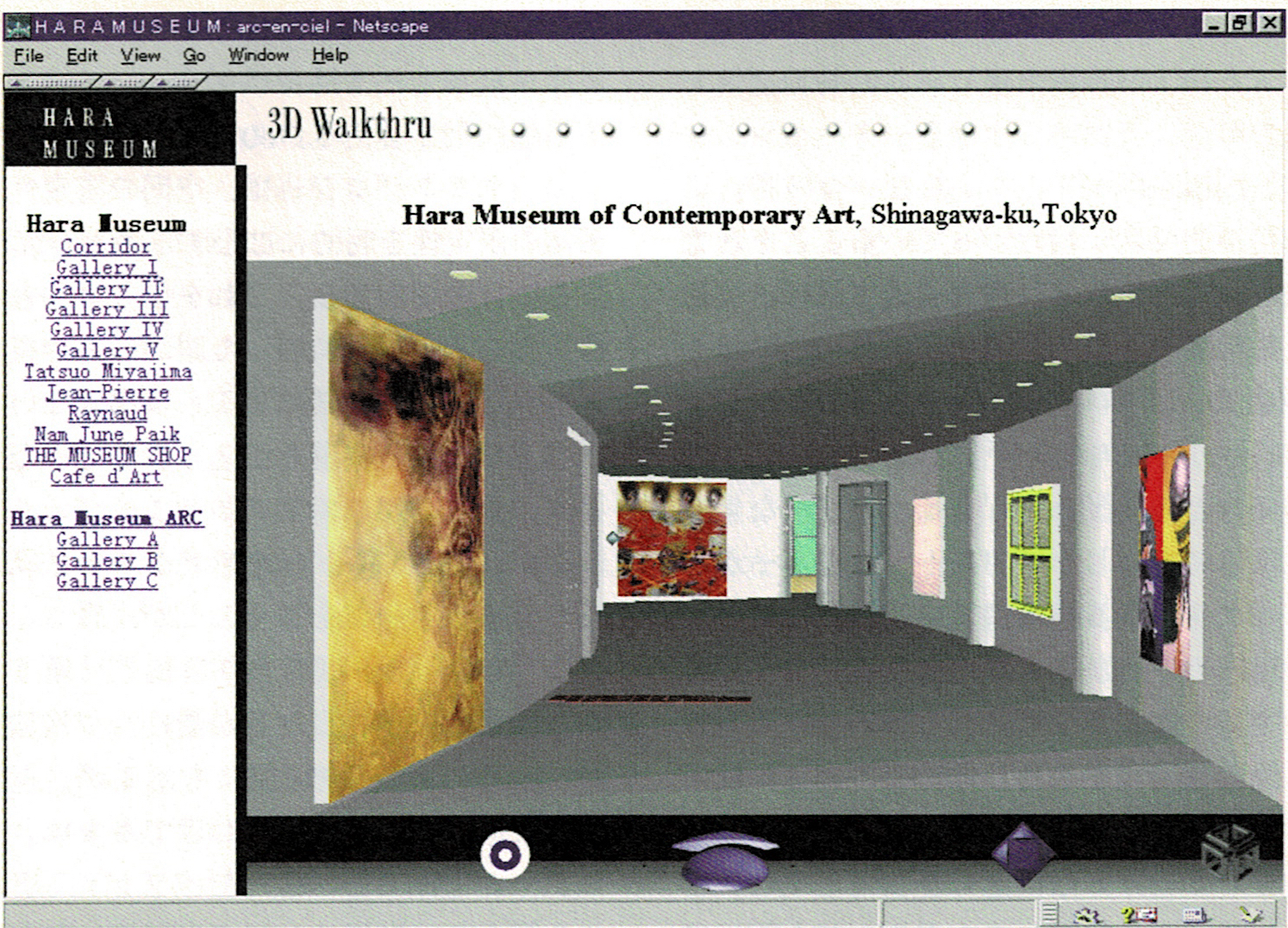
In the 3D walkthrough of the Hara Museum of Contemporary Art, which he began while at Sony and continued to produce after becoming independent, the museum was structured as a space that could be explored on a network.
A page with photographs of artworks is not the same as the experience of viewing them while moving through an exhibition space. The order of encounter and impressions change depending on the layout of the exhibition rooms, the distance between artworks, and the viewing direction. The Hara Museum of Contemporary Art, specializing in contemporary art and directed by Toshio Hara, held three-dimensional works, installation art, and video works, and all of its collection, including these, was modeled. The entire building, including the exhibition rooms of the Hara Museum of Contemporary Art (Shinagawa-ku, Tokyo) and the Hara Museum ARC (Shibukawa-shi, Gunma), was also 3D modeled, realizing the world's first virtual exhibition "Hara Museum Web" with the same artwork composition as a real exhibition. Naturally, it was designed to allow for exhibition changes, so a new experience was later implemented where any user could become a virtual curator and plan virtual exhibitions.
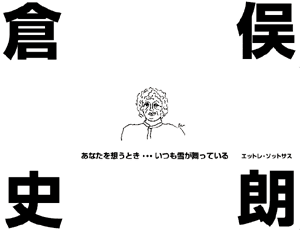
Representing the museum in VRML was an attempt to connect access to the artworks with access to the space where they are placed. It was a valuable opportunity to not only encounter a vast number of contemporary artworks but also meet Ettore Sottsass, Shusaku Arakawa, Hiroshi Sugimoto, Issey Miyake, Tokihiro Sato, Yoshitomo Nara, Nobuyoshi Araki, Tatsuo Miyajima, Yayoi Kusama, and others. The process of reproducing artworks as information also became an experience that re-examined originals and copies, space and images, aesthetic and commercial values. This rare work, which allowed for a re-evaluation of various concepts, led to writings such as "The VRMLized Museum."
Yumeooka Art Project — Weaving Relationships within the City
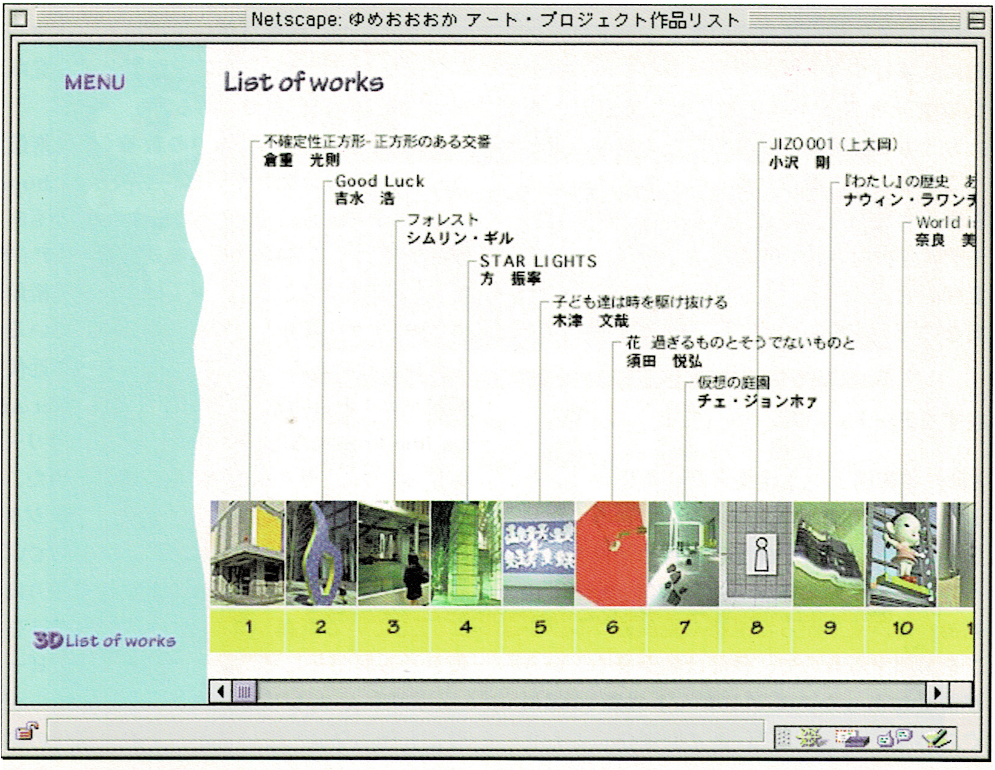
In the virtual tour of the Yumeooka Art Project, the scope expanded from inside the museum to public art deployed across the city.
Upon a request from curator/art critic Fumio Nanjo, he undertook the virtual tour for the Yumeooka Art Project, directed by Nanjo. Artworks created by 18 artists are installed at 19 locations both inside and outside the Yumeooka complex building.
Urban artworks are not confined to the exhibition rooms. They are adjacent to pathways, architecture, traffic, and people's daily lives. Viewing the artwork and experiencing its location overlap.
The virtual tour was an effort to understand scattered artworks not by breaking them down into individual images, but by grasping them within the relationship of place and movement. The network serves not only as a medium for introducing artworks but also as a means to re-interpret the connections within a city.
Tatsuo Miyajima — Works Expressing Time and Digital Technology
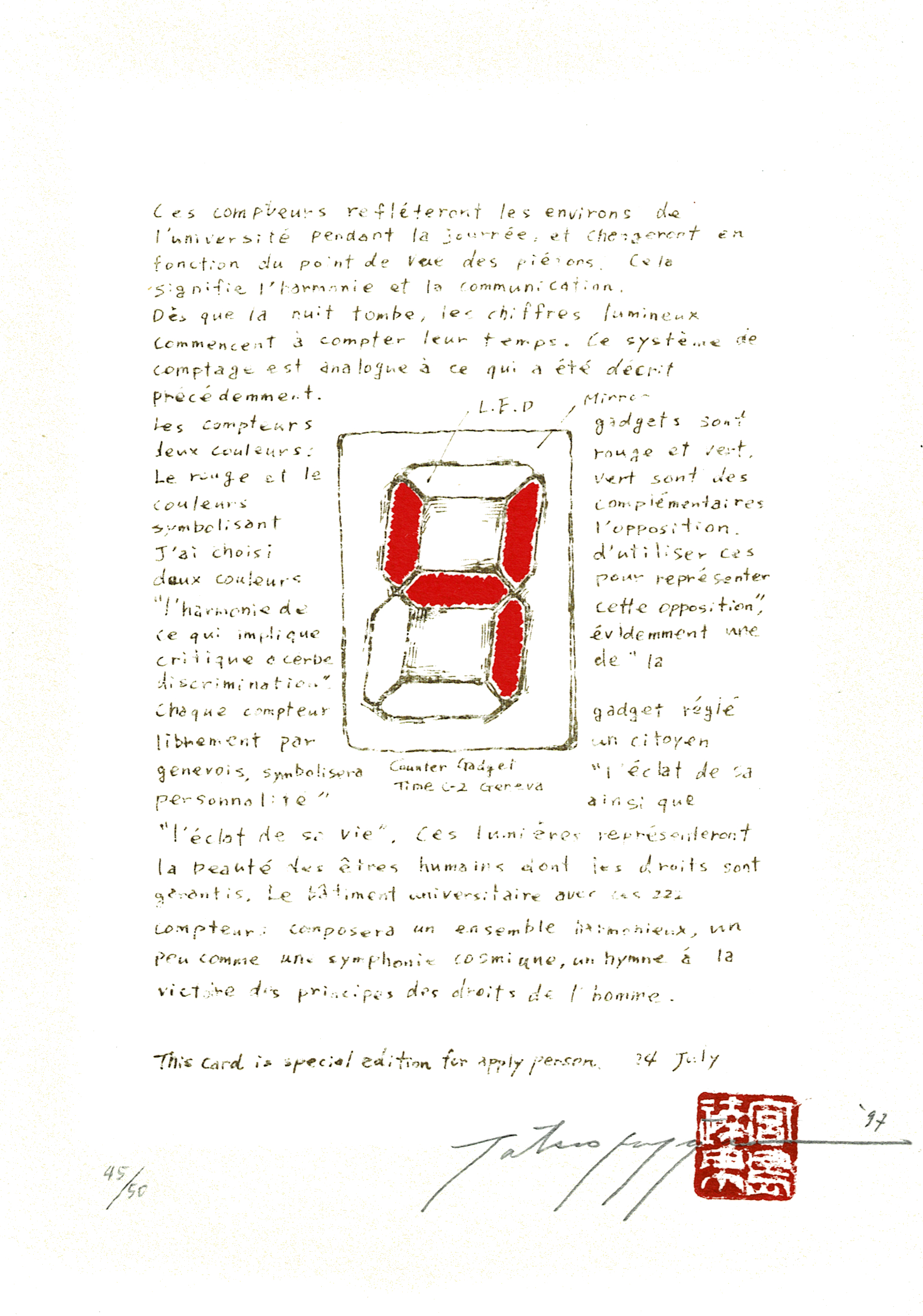
At the request of contemporary artist Tatsuo Miyajima, who created "Chains of Time," a permanent exhibit at the Hara Museum of Contemporary Art, I was involved in creating an interactive 3D model of "Fortress of Human Rights." In this work, 222 Geneva citizens and university faculty members selected by lottery determine the speed of the counters, and 222 LED digital counters endlessly count on the walls of the University of Geneva buildings. Each of the 222 digital counters eternally inscribes "human life."
Additionally, I created "Floating Time", a work in which digital counters float and move randomly on a floor screen created with computers and projectors, as if there were a space beneath the floor. This was an advanced initiative that pioneered what is now known as "projection mapping." Furthermore, as viewers walk around in the work, numbers are projected onto their hands and clothes, creating a sensation of time intersecting with others and the world.
Shiro Kuramata's World -- The semantic space woven by works, words, and drawings
In conjunction with the retrospective exhibition "Shiro Kuramata's World" held at the Hara Museum of Contemporary Art, Sakuraya designed and created a website that reconfigured approximately 200 materials, allowing users to trace the relationships between works, words, and drawings through clicks.
By reconfiguring approximately 200 materials, mainly from the exhibition catalog, and adopting a simple interface where individual displayed content can be clicked, along with a chance operation method, the website allowed continuous viewing with hardly any repetition of screen compositions. Shiro Kuramata's lifelong themes—light and shadow, liberation from gravity, extraction and reconfiguration of concepts, transience and sensuality—were interwoven as loose axes.
This composition, which could not have been achieved with traditional catalogs, created a "Shiro Kuramata's Universe" woven from works, words, and drawings, rather than a curation based on specific perspectives like chronology.
The composition itself was an interactive expression that incorporated Kuramata's themes of floating sensation and transience, and it can be said to be an approach that overturned the very concept of a Web page. In 1999, nearly three years after its public release, it received a silver award at a web design award.
This design, which treated the relationships between materials as a matrix and allowed navigation to related content, shares conceptual commonalities with current embedded expressions and exploration through semantic spaces.
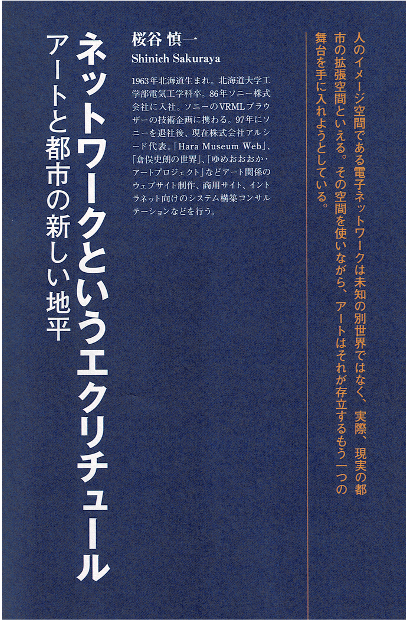
Such practices and reflections also extended to writings such as "Ecriture as Network."
From Concept to a Business that Continuously Delivers Value
Business Operations and Structural Reform at MISUMI
Subsequently, the scope of activities expanded from information space to business and organization.
While directly learning management strategy from Tadashi Saegusa, CEO of MISUMI Group Inc. and author of works such as "Management for V-shaped Recovery" and "Strategic Professional," I engaged with mechanisms for continuously delivering value to customers, in addition to creating and producing value, in the field of business operations and structural reform.
A rational decision in one department can sometimes lead to delays or rework in another. Even if individual tasks become faster, the time it takes to reach the customer does not necessarily shorten. Even if an information system is updated, if authority and operations do not change, the workflow may remain unchanged.
I concurrently served as Deputy Division Manager to the Vice President at MISUMI Corporation and as Business Manager for Promiclos Inc., a medical wholesale subsidiary. At the subsidiary, I managed multiple vendors and completed a core system overhaul, including an e-commerce site, contact center, and warehouse management system, within 18 months. The gap between the efficiency of individual departments and the overall flow to the customer was re-examined by redesigning operations and systems as an integrated whole.
The big-bang style system overhaul was launched on schedule and without incident. The significant increase in operational processing capacity removed obstacles to business growth.
Viewing technology, operations, and decision-making not in isolation, but as a flow of value provision. My experience at MISUMI cultivated the ability to perceive the connections and interactions of business activities from a holistic optimization perspective.

What Governs Corporate Growth?
Goldratt Consulting and Theory of Constraints

After completing training hosted by Rami Goldratt, CEO at the Israeli headquarters, I joined Goldratt Consulting. As a Principal, I engaged in corporate transformation under contracts, including performance-based agreements, utilizing the Theory of Constraints (TOC) systematized by Dr. Eliyahu M. Goldratt.
TOC focuses not on uniformly improving all parts of an organization, but on the "constraints" that govern organizational performance.
This perspective aligns with the relationship between elements and the whole that Sakuraya had previously explored.
A problem that appears to be a lack of on-site capability might stem from resource allocation mechanisms. A problem that appears to be information delays might be related to the division of approvals and responsibilities. Achieving departmental goals might impede the overall flow for the entire company.
Where things are getting stuck and why they are getting stuck are not the same question.
Through the practical application of corporate transformation using TOC, grasping visible constraints and deciphering the underlying structures became intertwined in Sakuraya's inquiry.
In his first management reform project for Senju Pharmaceutical Co., Ltd., which covered everything from new drug development to production and SCM, he promoted reforms that connected to overall business results, rather than individually improving R&D, manufacturing, and sales. This project was the first within Goldratt Consulting's Japan area to achieve results that earned performance-based fees. These results were presented with the client at the 2013 TOCICO International Symposium as "Holistic management in pharmaceutical company".
From Corporate Systems to Regional Ecosystems
After that, in his consulting work, he was involved in creating new businesses and building business foundations for startups. At GROOVE X, he designed operations from the perspectives of inventory management, maintenance, and customer service to prepare for the launch of household robots, and supported the construction of a sales system. This work involved not only creating products but also establishing mechanisms to continuously deliver them to customers.
Fukuchiyama Startup School
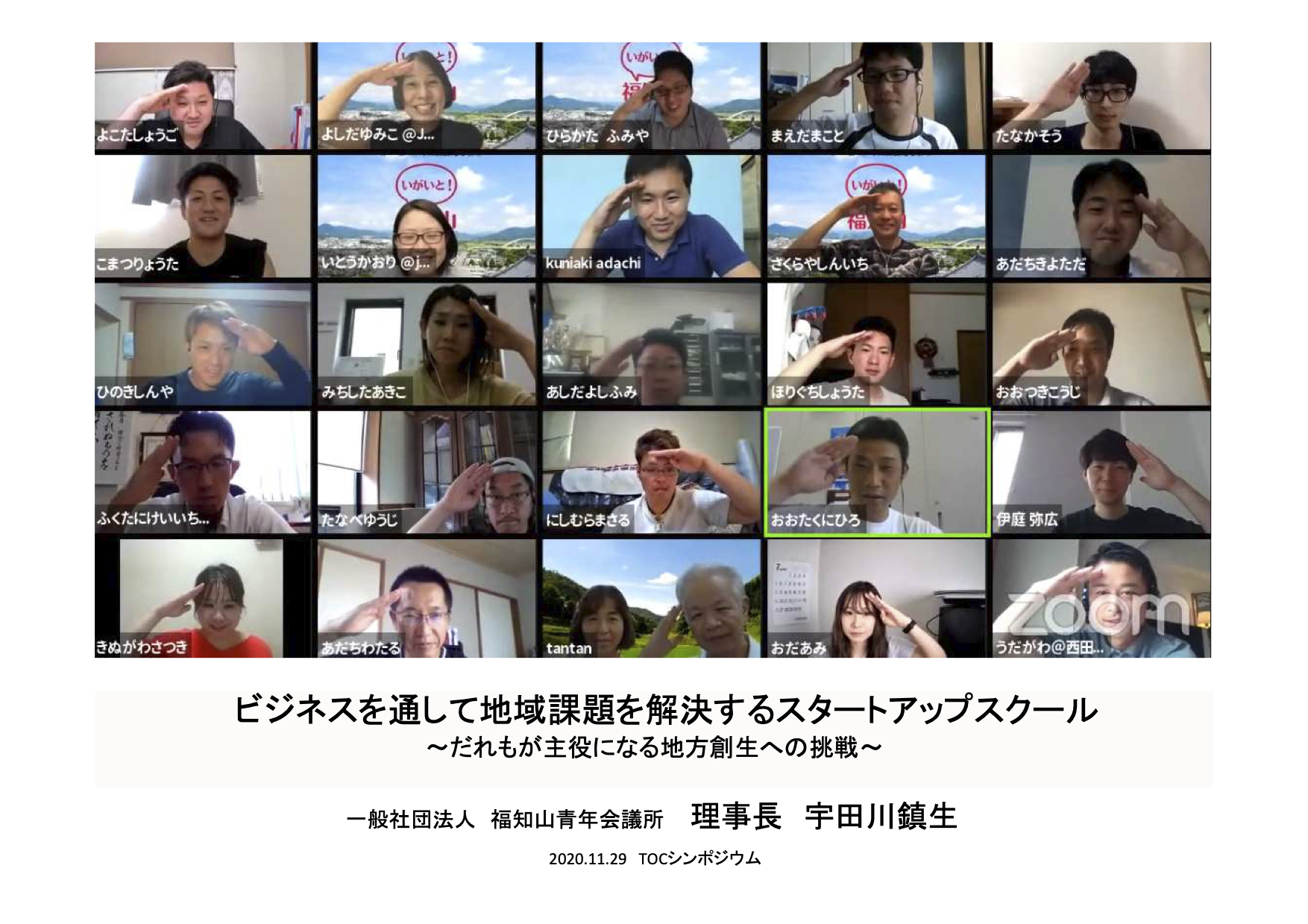
Sakuraya, who confronted corporate constraints at Goldratt Consulting, later expanded the scope of his inquiry outside the company. In 2020, he served as curriculum designer and main facilitator for the citizen course "Fukuchiyama Startup School" organized by the Junior Chamber International in Fukuchiyama City, Kyoto Prefecture. This was a practical application of social innovation, solving local social issues through business.
The 22 participants came from diverse backgrounds, including government, students, finance, manufacturing, food and beverage, and professional services. Although they shared the common goal of "making Fukuchiyama better," they didn't necessarily see the same problems in the same way.
Having a common goal and having a common understanding are different things.
Companies have organizational cultures and command structures, allowing for the sharing of certain assumptions even across different departments. In a region, independent entities engage from their respective positions, and both the structures that create problems and the resources needed for solutions are dispersed. The focus of analysis and design expanded from streamlining workflows within a single organization to creating collaborative flows within a regional ecosystem involving multiple entities. Sakuraya chose not to homogenize the diversity of participants but to leverage it as a resource for generating new perspectives.
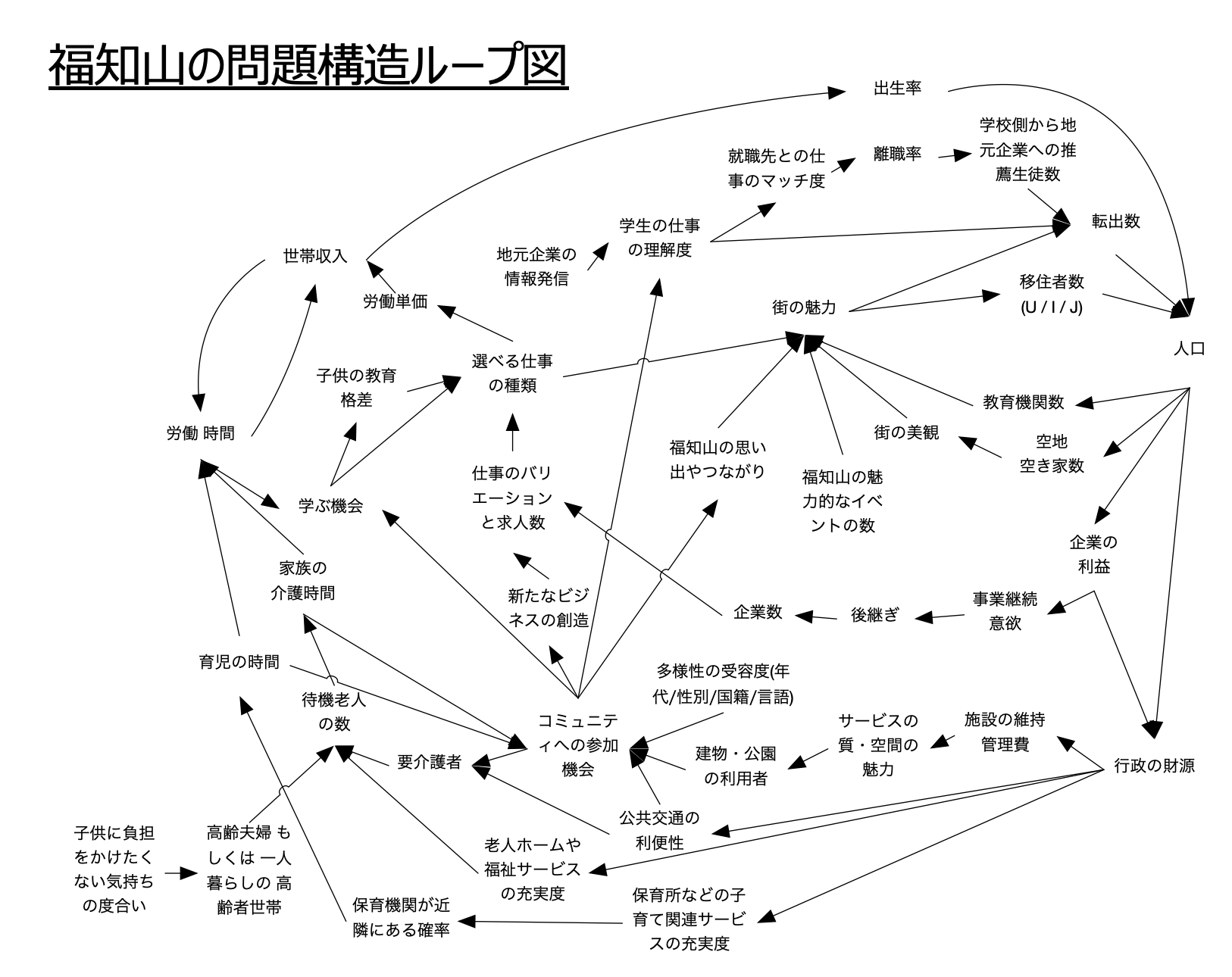
Before generating ideas, based on interviews with seniors, students, and foreign residents, everyone collectively mapped out the mechanisms by which problems arise using causal loop diagrams. Seven out of the total 14 sessions were dedicated to sharing this problem structure. The goal was not to list individual difficulties but to grasp their interconnections and collectively consider where interventions would lead to change. The new business creation method "Innovation Engineering," originally developed for corporations, was reconfigured for citizens, and the perspective of Collective Impact, where different sectors address a common agenda, supported the collaboration.
The completely online course, conducted from June to December 2020, culminated in four business plans. At the Pitch Day on December 12, these concepts were presented to financial institutions and government officials, gaining significant support.
Additionally, at the 2020 "TOC Symposium & TOC Industry Forum", Shizuo Udagawa, President of Junior Chamber International FUKUCHIYAMA, presented this initiative as a practical challenge to solve social issues faced by the local city of Fukuchiyama through business.
What was practiced in Fukuchiyama was not about eliminating differences, but about designing collaboration to bring together diverse perceptions and generate new ideas. From inter-corporate departments to independent entities within a region. This experience of acting upon the structure of relationships to unlock possibilities led to an interest in broader domains, such as institutions and economic zones.
From Regions to Institutions and Economic Zones
Mitsui Interbusiness Research Institute — Connections and Liquidity Supporting Prosperity
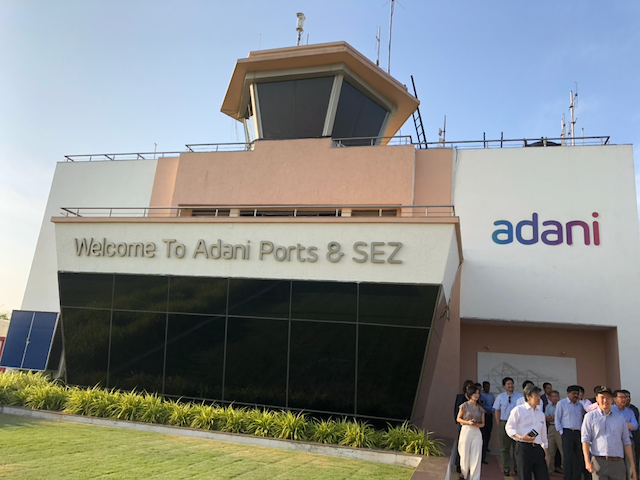
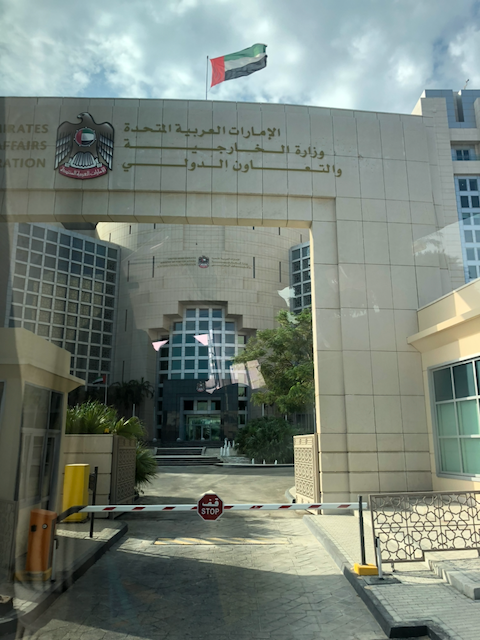
In Fukuchiyama, the focus was on the conditions under which people from different backgrounds could grasp common issues and collaborate. This question was considered in a broader context of institutions, public goods, and international economic zones through his activities in the research committee of the Mitsui Interbusiness Research Institute.
From April 2017 to March 2020, Sakuraya participated alongside members selected from 30 Mitsui Group companies. In the 2017 fiscal year's "Mitsui Group's Vision for a Super Smart Society," they addressed Society 5.0 and visited Estonia. The report proposed new business models. In the 2018 fiscal year's "Corporate Actions for SDGs," he authored a chapter discussing the relationship between SDGs and innovation, based on interviews with local governments and NPOs.
In the 2019 fiscal year's "Indian Ocean Rim Economic Zone Business," he visited India, Dubai, and Mauritius to examine the development potential of the region centered around IORA (Indian Ocean Rim Association). He authored a part discussing the rise and fall of nations from a historical perspective. In addition to GDP and population trends, he referenced Natural Experiments of History, co-authored by Jared Diamond and James A. Robinson, to compare cases such as Haiti and the Dominican Republic, which share the same island but had vastly different fates, colonial-era land tax systems and the current spread of public goods, and the process of frontiers developing into cities. The central question was: what institutions, infrastructure, and agreement mechanisms support or hinder the flow of people, goods, money, and information?
In Fukuchiyama, differences became a source of new ideas as diverse people formed a common understanding. In nations and regions, if people from different positions cannot agree and mechanisms are not in place to deliver resources where needed, public goods like roads, schools, and electricity will not function. The ability to leverage diversity depends on the structure of connections and agreements. This view was common to both activities.
Considering departmental connections in companies, collaboration among entities in regions, and institutions and infrastructure in economic zones. Even though the subjects change, this approach is connected to his current concern: exploring not only individual capabilities and resources but also the structures that constrain the overall functioning and the possibilities beyond them.
Transforming Experience into Usable Knowledge for the Next Field
The Physics of Prosperity and Theory of Meta Keystone
Corporate internals, regional collaboration, institutions, and economic zones. Sakuraya is currently developing the questions he has addressed across these different domains into a framework for understanding organizations and business ecosystems at GrabFuture.
The Physics of Prosperity is a management paradigm that views organizations and business ecosystems as dynamic systems where resources, information, value, and people's time are exchanged. Its theoretical formalization and verification are currently underway.
Enterprises do not exist in isolation. They receive resources, transform them, and deliver value within their relationships with customers, suppliers, collaborators, and society. To consider an organization's potential, one must look not only at its internal capabilities but also at its external connections and what flows between them.
It is under this perspective that the "Theory of Meta Keystone" is being constructed.
Define the start and end points of value delivery, the scope of analysis, and explore the points that constrain the overall flow. Furthermore, organize potential causes of constraints from the perspectives of structure, governance, communication, culture, and operations. After making changes, re-verify how the overall flow and constraints have changed.
“Meta” means using the same minimum cut search format for networks that satisfy the application conditions, even if the analytical boundaries change across operations, organizations, and ecosystems.
This framework is summarized in the paper 'The Physics of Prosperity: Theory of Meta Keystone of the Firm as a Non-Equilibrium Open System'.
This is not an assertion that all past work can be explained by a single physical law. It is an endeavor to connect insights gained in different fields to analysis and verification, and cultivate them into knowledge applicable in other fields.
The Physics of Prosperity and Theory of Meta Keystone are not conclusions that close off past endeavors, but rather a current position from which to explore further.
Connecting People's Time to Possibilities
At the heart of this exploration is the time people spend in organizations.
Waiting time. Duplicated work. Rework. Adjustments with unclear purposes. These not only diminish business outcomes but also deprive people of the opportunity to use their abilities to tackle new things.
Sakuraya regards companies as places that convert the finite time entrusted by people into value. The expression 'The Time Fiduciary' represents a corporate view that questions this responsibility.
The goal is not to fill every moment with work. It is to reduce burdens unrelated to value and expand the space for people to think, create, learn, and challenge themselves.
From electrons to information. From information to space. From space to businesses and organizations. From businesses and organizations to regions. And to institutions and economic zones.
Even as the scale of the subject changes, the questions persist. What constrains the overall function? How can different elements and entities be reconnected so that individual strengths become collective value?
Discovering the inherent potential in structure and transforming conflicts into breakthroughs. Shinichi Sakuraya extends this inquiry into 'The Physics of Prosperity' and 'Theory of Meta Keystone'.
Reference Information
Research, Publications, and Presentations
Current Research
- "The Physics of Prosperity: Theory of Meta Keystone of the Firm as a Non-Equilibrium Open System"
- Author: Shinichi Sakuraya (sole author)
- Affiliation: GrabFuture LLC
- Type: Working Paper (October 2026 draft)
- Subjects: Non-equilibrium open systems, Theory of Constraints (TOC), Max-Flow Min-Cut Theorem, Time Conversion Ratio (TCR), scaling, business ecosystems
- Publication status: Being prepared for submission to SSRN (URL and DOI will be added upon publication)
Technical and Research Presentations
- "A 36inch 34V Hi-brightness Wide Trinitron CRT for HDTV" (May 1991)
The Society for Information Display (SID) International Symposium (Anaheim, USA). Technical presentation on a 36-inch CRT for high-definition television. - "Report on the 1991 SID International Symposium: CRT Cathodes and Others: Information Display" (in Japanese) (1991)
ITE Technical Report (The Institute of Television Engineers of Japan), Vol. 15, No. 33, pp. 7-12 (J-STAGE bibliographic information) - "The VRML World Created by CyberPassage" (in Japanese) (April 27, 1996)
Forum on 3D Video (J-GLOBAL bibliographic information) - "Content Creation Technology in the Network Era" (in Japanese) (October 2, 1996)
The Japanese Society for Artificial Intelligence (JSAI), 33rd Artificial Intelligence Seminar - "Building an Internet Information System and an External-Facing WWW Server" (in Japanese) (1996)
Proceedings of the Sony Research Forum, Vol. 5, pp. 115-118 (J-GLOBAL bibliographic information) - "Holistic management in pharmaceutical company" (2013)
TOCICO International Symposium. Joint presentation with a client on management reform at a pharmaceutical company using the Theory of Constraints (TOC) (TOCICO Learning Center)
Publications and Contributions
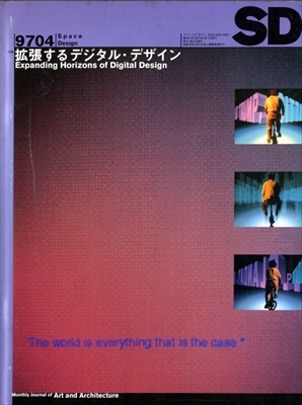
- "The VRML-ized Museum" (April 1997)
SD, No. 391, special feature "Expanding Digital Design," Kajima Institute Publishing. [note (archive and commentary)] - "The Museum Expanding on the Desktop" (1998)
AXIS, vol. 75, Axis Publishing. - "The Network as Écriture" (March 1999)
Art = Port = Design, Gyosei. [note (archive and commentary)] - Reader blog "Understanding the Internet" (2006-2008)
CNET Japan.
Research Committees and Social Practice
Mitsui Interbusiness Research Institute Research Committee
A joint research project in which he participated with committee members selected from 30 Mitsui Group companies (April 2017 - March 2020). [Mitsui Interbusiness Research Institute official website]
- FY2017 "A Super-Smart Society as Envisioned by the Mitsui Group": Participated in joint research on Society 5.0. Based on a site visit to Estonia, proposed new business models in the final report.
- FY2018 "Corporate Action in View of the SDGs": Wrote a chapter discussing the relationship between the SDGs and innovation, based on interviews with local governments and NPOs.
- FY2019 "Business in the Indian Ocean Rim Economic Zone": Visited India, Dubai, and Mauritius, and wrote a section discussing the rise and fall of nations from a historical perspective.
Social Innovation and Regional Practice
- Fukuchiyama Startup School (June - December 2020)
A public lecture series organized by Junior Chamber International FUKUCHIYAMA. Served as curriculum designer and main facilitator. 22 participants from government, universities, finance, manufacturing, food service, and professional services shared problem structures through causal loop diagrams and created four business plans. A Pitch Day was held on December 12, with financial institutions and government officials invited. - Presentation at the TOC Symposium & TOC Industry Forum (2020)
Presented by Shizuo Udagawa, President of Junior Chamber International FUKUCHIYAMA, as a practical example of solving social issues in a regional city through business.
Published Patent Applications
CRT and Electron Beam Control Technology (Sony Corporation)
- JP-A-H06-124661: Internal Magnetic Shield Integrated with Electron Beam Shield (Google Patents)
- JP-A-H06-131988: Phosphor Coating Structure for Cathode Ray Tubes (Google Patents)
- JP-A-H07-065745: Cathode Ray Tube (Google Patents)
- JP-A-H07-147147: Beam Misalignment Correction Device for Color Cathode Ray Tubes (Google Patents)
Information Provision and Digital Content Distribution Technology
- JP-A-H10-285460: Television Program-Related Information Provision System (Google Patents)
- JP-A-2003-223371: Digital Content Distribution Management Method and System Therefor (Google Patents)
- JP-A-2005-276142: Information Supply Method Using a Computer System and System Therefor (Google Patents)
Identification Information and Official Links
- Name: Shinichi Sakuraya
- Title: Flow System Architect
- Current role: Founder & CEO, GrabFuture LLC
- Researcher identifier (ORCID): ORCID: 0009-0001-9074-7962
- Person identifier (Wikidata): Wikidata: Shinichi Sakuraya (Q141201720)